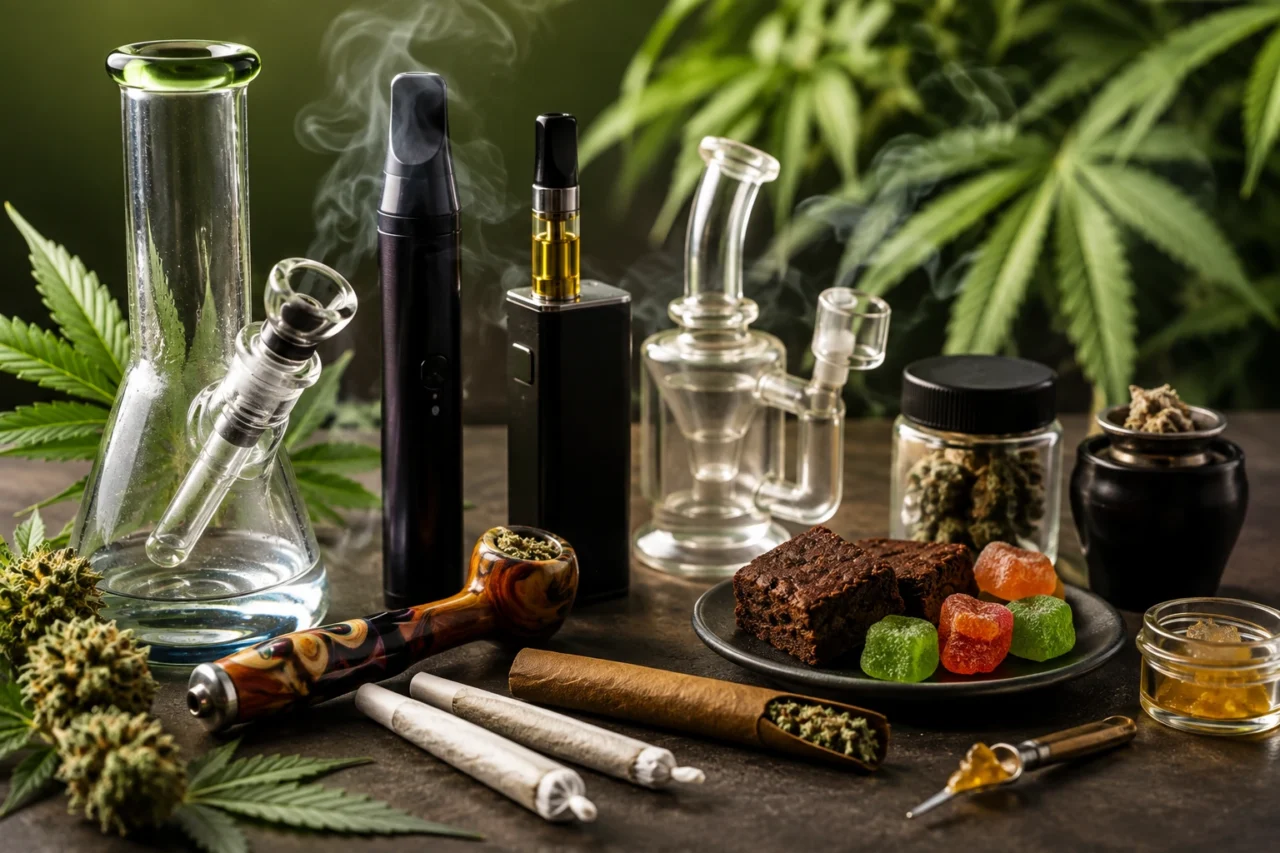
Cannabis can be consumed in several ways, and smoking remains one of the most familiar. If you are researching the different ways to smoke weed, you will quickly find everything from traditional joints and pipes to water pipes and other devices.
The main differences come down to the type of product being used, the device involved, convenience, flavor, and how quickly the effects are felt. However, the method you choose does not make cannabis risk-free. Cannabis smoke contains many of the same toxic and irritating chemicals found in tobacco smoke, and smoking cannabis can affect the lungs.
This guide explains the major cannabis smoking methods, how they differ, and what to consider before choosing one.
Ready to get started?
Schedule an online consultation today to learn more about obtaining a medical marijuana recommendation.
What Are the Different Ways to Smoke Weed?
The most common approaches include:
- Joints: Cannabis flower rolled in smoking paper.
- Blunts: Cannabis placed inside a cigar or tobacco-leaf-style wrap.
- Hand pipes: Small, portable devices with a bowl for flower.
- Bongs or water pipes: Devices that pass smoke through water before inhalation.
- One-hitters: Small pipes designed for a relatively small amount of flower.
- Steamrollers: Larger chamber-style pipes that can produce a more intense inhalation.
- Vaporizers: Devices that heat cannabis rather than burning it.
- Dab rigs: Devices designed for cannabis concentrates rather than ordinary flower.
- Nectar collectors: Portable concentrate-vaporizing devices.
Not all of these methods are technically “smoking.” Vaporizers, for example, heat cannabis to produce an aerosol rather than combustion smoke. Concentrates are also different from traditional cannabis flower and can contain substantially higher THC concentrations.
1. Joints
A joint is one of the simplest and most recognizable cannabis formats. It consists of cannabis flower enclosed in rolling paper and is designed for a cigarette-like smoking experience.
(a) Why people choose joints
Joints are popular because they are:
- Relatively portable
- Disposable after use
- Easy to share
- Available as pre-rolls
- Familiar to many cannabis consumers
Pre-rolls can be particularly convenient for people who do not want to roll their own.
(b) Something to consider
Because a joint involves combustion, the user inhales cannabis smoke. Smoking cannabis can irritate the lungs and is associated with coughing, mucus production, and symptoms of bronchitis.
2. Blunts
Blunts are another traditional method, but they differ from joints because they typically use a cigar-style or tobacco-leaf wrap.
The wrap can affect the overall experience, including the taste and amount of smoke produced. If the wrap contains tobacco, it also introduces tobacco exposure into the session.
This is worth considering because combining cannabis and tobacco can increase exposure to harmful chemicals and may create additional risks for the lungs and cardiovascular system.
3. Hand Pipes
Hand pipes are compact smoking devices with a chamber or bowl for cannabis flower.
They are available in materials such as glass, metal, ceramic, wood, and silicone. Glass is popular because it does not generally add much flavor to the cannabis.
Advantages
A hand pipe can be:
- Small and portable
- Reusable
- Relatively simple
- Available in many shapes and sizes
However, a pipe still involves combustion. A smaller device also does not mean the smoke is harmless.
4. One-Hitters
A one-hitter is a narrow, compact pipe designed around small amounts of cannabis.
People often choose one because it is portable and does not require a large device. Some versions are paired with small storage compartments, making them convenient for carrying.
The main appeal is simplicity rather than filtration. Like other smoking devices, a one-hitter produces cannabis smoke when flower is burned.
5. Bongs and Water Pipes
Bongs, also called water pipes, use water as part of the device’s design.
The smoke passes through water before reaching the user. This can cool the smoke and change the feel of the inhalation, but water filtration should not be interpreted as making cannabis smoke safe.
The CDC notes that smoked cannabis can harm lung tissue regardless of how it is smoked.
Why do people use water pipes?
Common reasons include:
- The cooling effect
- The reusable design
- Different device sizes and shapes
- The ability to use accessories such as percolators
Keeping reusable equipment clean is also important from a general hygiene perspective.
6. Steamrollers
Steamrollers are larger chamber-style pipes designed to hold smoke before it is inhaled.
Compared with a small hand pipe, this type of device can produce a more concentrated inhalation. That can make the experience feel considerably stronger, particularly for someone who is inexperienced or using high-THC cannabis.
Because cannabis products vary widely in THC concentration, effects can be difficult to predict. Higher-potency products can increase the likelihood of unwanted effects such as anxiety, panic, impaired coordination, and other problems.
7. Dry-Herb Vaporizers
A dry-herb vaporizer is different from a traditional smoking device because it heats cannabis flower without intentionally burning it.
Instead of combustion smoke, the device produces an inhalable aerosol containing compounds released from the heated flower.
This distinction is important, but it does not mean vaping cannabis is proven to be completely safe. The CDC says there are health and safety risks associated with different cannabis consumption methods, and scientists do not yet have enough evidence to conclude that one method is universally safer than another.
Portable vs. desktop vaporizers
Portable devices are designed for convenience and mobility, while desktop models are generally larger and intended for use in one location.
Dry-herb vaporizers can also differ in their heating technology, temperature controls, battery systems, and maintenance requirements.
8. Cannabis Concentrates and Dab Rigs
Dab rigs are designed for cannabis concentrates rather than ordinary flower.
Concentrates can include products such as wax, shatter, rosin, and other extracts. Because concentrates may contain very high levels of THC, their effects can be much stronger than those associated with traditional flower.
For that reason, concentrates deserve additional caution.
The CDC notes that high-THC products and some concentrate-based methods can increase the risk of overconsumption and may be associated with greater cannabis use disorder risk.
9. Nectar Collectors
A nectar collector, sometimes called a dab straw, is another device intended for cannabis concentrates.
Unlike a traditional flower pipe, it is designed around concentrate consumption. Some versions include water filtration, while others are more compact.
Because this method involves concentrated cannabis products, the same concerns about high THC potency apply.
Smoking vs. Vaping Cannabis: What’s the Difference?
The biggest difference is combustion.
Smoking burns cannabis and creates smoke. Vaping heats cannabis or cannabis extracts to produce an inhalable aerosol.
That does not automatically make vaping risk-free. Cannabis vape products may contain highly concentrated THC, additives, or contaminants, and the CDC has reported links between cannabis vaping and lung injury.
If respiratory health is your main concern, talk with a healthcare professional about cannabis options rather than assuming one inhalation method is harmless.
Which Cannabis Method Is Best for Beginners?
There is no single method that is medically or universally “best” for everyone.
The right choice depends on factors such as:
- Previous cannabis experience
- THC concentration
- Why you are using cannabis
- Local laws
- Personal health considerations
- Whether you want to inhale cannabis at all
- Advice from a healthcare professional
For someone unfamiliar with cannabis, high-THC concentrates may be particularly difficult to predict. Products with higher THC concentrations can produce stronger intoxicating effects and increase the risk of consuming more than intended.
Is Smoking Weed Safe for Your Lungs?
Smoking cannabis is not harmless.
According to the CDC, cannabis smoke contains many of the same toxins, irritants, and carcinogens found in tobacco smoke. Smoking cannabis can damage lung tissue and is associated with coughing, mucus production, and bronchitis symptoms.
Research is still developing around some long-term outcomes, including the relationship between cannabis smoking and lung cancer. That uncertainty should not be interpreted as proof that smoking is safe.
If you already have a respiratory condition, discuss cannabis use with your healthcare provider.
What About Secondhand Cannabis Smoke?
The smoke does not affect only the person consuming cannabis.
Secondhand cannabis smoke contains many of the same toxic and cancer-causing chemicals found in tobacco smoke. It can also contain THC, meaning people nearby can be exposed to cannabis compounds.
For this reason, avoid exposing children, pregnant people, pets, or other household members to cannabis smoke.
Does a Bong Make Cannabis Smoke Safer?
Not necessarily.
Water can cool smoke and alter how it feels, but it does not remove all of the harmful substances created during combustion.
The CDC specifically states that smoked cannabis can harm lung tissue regardless of how it is smoked.
So a bong may change the experience, but it should not be viewed as a way to eliminate the health risks associated with smoking.
What Factors Affect the Cannabis Experience?
The method is only one part of the picture.
Other factors include:
1. THC concentration
Higher THC concentrations generally produce stronger intoxicating effects and may increase the likelihood of unwanted reactions.
2. Amount consumed
More cannabis does not necessarily mean a better experience. Consuming more can increase impairment and unwanted effects.
3. Individual tolerance
Someone who uses cannabis regularly may respond differently from someone with little or no previous experience.
4. Other substances
Using cannabis with alcohol or other drugs can increase impairment and the risk of harm.
5. Personal health
Existing heart, lung, mental health, or other medical conditions may affect whether cannabis is appropriate.
Important Safety Considerations
Regardless of the consumption method, keep these points in mind:
- Do not drive or operate machinery while impaired.
- Avoid combining cannabis with alcohol or other drugs without medical guidance.
- Keep cannabis products away from children and pets.
- Be especially cautious with high-THC concentrates.
- Do not assume that water filtration makes smoke harmless.
- People who are pregnant or breastfeeding should talk with a healthcare professional about cannabis use.
- If cannabis causes severe or unusual symptoms, seek appropriate medical help.
Cannabis can affect attention, coordination, judgment, and reaction time, making driving after use unsafe.
Smoking Cannabis vs. Other Consumption Methods
Smoking is only one way people use cannabis.
Other options include:
| Method | General characteristic | Main consideration |
|---|---|---|
| Smoking flower | Effects are generally felt quickly | Involves combustion and smoke |
| Vaping | Uses heated cannabis or extracts | Health risks remain and evidence is evolving |
| Edibles | Cannabis is consumed through food or drinks | Effects take longer and may last longer |
| Tinctures | Cannabis compounds are taken orally | Effects differ from inhaled products |
| Topicals | Applied to the skin | Intended for localized use and generally do not produce the same intoxicating effects as THC products taken systemically |
The CDC notes that different cannabis methods carry different risks. Edibles, for example, can take longer to produce effects, which may increase the chance that someone consumes more before realizing the product has taken effect.
Frequently Asked Questions
What are the most common ways to smoke weed?
The most common methods include joints, blunts, hand pipes, one-hitters, bongs or water pipes, and other smoking devices. Vaporizers and concentrate devices are also commonly used but involve different processes than traditional smoking.
Is a joint or bong safer?
Neither should automatically be considered safe. Both involve inhaling cannabis smoke, and the CDC states that smoked cannabis can harm lung tissue regardless of the smoking method.
Is vaping weed safer than smoking it?
There is not enough evidence to say that vaping cannabis is universally safer. Vaping avoids traditional combustion but has its own risks, including concerns about concentrated THC, additives, contaminants, and lung injury.
Are blunts different from joints?
Yes. Joints generally use rolling paper, while blunts traditionally use cigar-style or tobacco-leaf wraps. If tobacco is involved, the user is also exposed to tobacco-related chemicals.
What is the difference between flower and concentrates?
Flower is the dried cannabis plant material, while concentrates are extracts containing cannabinoids in much higher concentrations in many products. High-potency concentrates can produce stronger effects and increase the risk of overconsumption.
Can cannabis smoke cause coughing?
Yes. Cannabis smoke can irritate the airways and is associated with coughing, mucus production, and bronchitis symptoms.
Does smoking cannabis affect your heart?
Cannabis can temporarily increase heart rate and may raise blood pressure immediately after use. Researchers are continuing to study its longer-term cardiovascular effects.
Can secondhand cannabis smoke affect other people?
Yes. Secondhand cannabis smoke contains toxic chemicals and THC. More research is needed to fully understand the health effects of secondhand cannabis exposure, particularly in children.
Final Thoughts
There are many different ways to smoke weed, ranging from traditional joints and hand pipes to bongs and other devices. Vaping and concentrate products add additional options, although they are technically different from smoking because they do not rely on the same combustion process.
The method can change the experience, but it does not eliminate cannabis-related risks. Smoking exposes the lungs to combustion products, while high-potency concentrates and vaping products bring their own concerns.
If you use cannabis for medical reasons, choosing a consumption method should be part of a broader conversation about your health, the product’s THC concentration, possible interactions, and your state’s laws. A qualified healthcare professional can help you make a decision based on your individual circumstances.