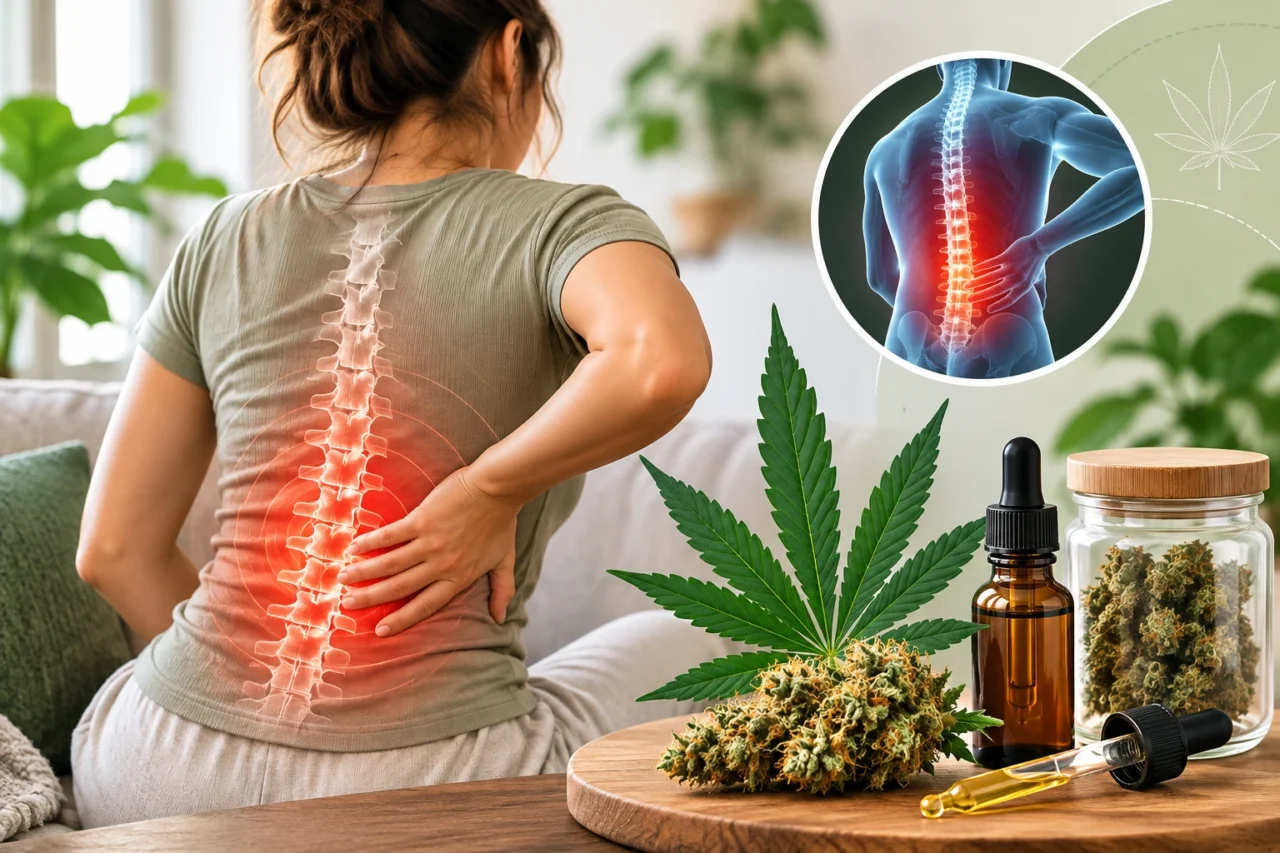
Chronic lower back pain can be difficult to manage, especially when standard treatments provide only limited relief. Prescription pain medicines, physical therapy, anti-inflammatory drugs, and other approaches may help some people, but not everyone gets lasting results.
That has led researchers to investigate other options, including medical cannabis for back pain.
A recently published five-year study from researchers at Rabin Medical Center in Israel looked at 241 adults with treatment-resistant chronic low back pain. The participants had already undergone conventional treatments and then received inhaled medical cannabis. Over the five-year observation period, researchers reported substantial improvements in pain and disability, along with a major reduction in the use of opioids and several other medications.
The results are interesting, but they should be interpreted carefully. This was an observational study without a separate randomized control group, so it cannot prove that cannabis alone caused the improvements.
Here’s what the research actually found and what it may mean for people living with chronic back pain.
Can Medical Cannabis Help With Back Pain?
Medical cannabis may help some people manage chronic back pain, but the evidence is still developing.
The new five-year study found that patients with difficult-to-treat chronic low back pain reported large and sustained improvements after beginning inhaled cannabis therapy. The researchers measured pain intensity, disability, and how much pain interfered with everyday activities.
However, this does not mean cannabis is a proven replacement for every back-pain treatment.
The CDC says evidence for cannabis in treating most types of acute and chronic pain remains limited, although some studies suggest potential benefits for certain types of neuropathic pain.
For that reason, medical cannabis for back pain is best viewed as a treatment option that deserves further research rather than a guaranteed solution.
What Did the New Back Pain Study Examine?
The study, published in Biomedicines in 2026, analyzed prospectively collected data from 241 adults with treatment-refractory chronic low back pain. The participants had experienced persistent pain and had documented failures with conventional treatment before beginning cannabis therapy.
Researchers followed patients for five years and compared their outcomes with their own pre-cannabis baseline.
The group had significant treatment histories. Before cannabis treatment:
- All 241 participants had used opioid analgesics.
- All had used NSAIDs.
- All had undergone physiotherapy.
- About 38.6% had previously used gabapentin or pregabalin.
- About 80.5% had previously used an SSRI or SNRI.
- Average pain at baseline was approximately 8.1 on a 0-to-10 scale.
This is important context. The study was not looking at people with occasional back soreness. It involved patients whose chronic pain had remained difficult to manage despite multiple conventional approaches.
What Happened to Pain Levels?
The researchers reported significant improvements across several patient-reported measures.
The average numeric pain rating decreased by approximately 5.36 points over five years, while measures of disability and pain interference also improved. At Year 5, 89.2% of patients had achieved at least a 30% reduction in their reported pain, and 77.2% achieved at least a 50% reduction.
Those numbers are notable, but they need context.
The study did not randomly assign patients to cannabis or placebo. Everyone received cannabis, and there was no concurrent control group. Factors such as expectations, changes in other treatments, natural fluctuations in pain, and patient selection could have contributed to the results.
The researchers themselves acknowledged that causal conclusions cannot be made without randomized comparative trials.
Did Cannabis Reduce Opioid Use?
One of the most significant findings involved opioid use.
At the beginning of the study, all 241 participants were using opioid medications. By Year 5, the proportion still using opioids had fallen to 4.6%, representing a 95.4% within-patient reduction in opioid use.
The study also reported reductions in other medications:
| Medication | Use at baseline | Use at Year 5 |
|---|---|---|
| Opioids | 100% | 4.6% |
| NSAIDs | 100% | 7.1% |
| SSRI/SNRI medications | 80.5% | 5.4% |
| Gabapentinoids | 38.6% | 2.5% |
These results are promising, but they should not be interpreted as proof that cannabis can safely replace opioids.
Someone taking prescription opioids should never stop or dramatically reduce them without discussing the change with the prescribing clinician. Opioids can cause withdrawal when stopped suddenly, and treatment plans need to account for the individual’s condition, medication dose, and other health factors.
Why Is Reducing Long-Term Opioid Use Important?
Opioids can be effective pain medicines, but long-term use comes with significant risks, including tolerance, dependence, and overdose.
The CDC’s opioid prescribing guideline emphasizes nonopioid and nonpharmacologic approaches when appropriate for chronic pain and recommends that clinicians carefully weigh benefits and risks when considering opioid therapy.
At the same time, the evidence does not support treating cannabis as a simple substitute for opioids.
The CDC notes that research on cannabis and opioid prescribing has produced mixed findings. Some studies have reported reductions in opioid prescribing in places with medical cannabis policies, while other research has not found the same relationship.
That makes the new back-pain study interesting but not definitive.
What Type of Cannabis Was Used?
The study specifically examined inhaled cannabis, including smoked or vaporized cannabis.
The products used by participants varied in cannabinoid concentrations. Reported THC concentrations ranged from 4% to 22%, while CBD concentrations ranged from 2% to 22%. Researchers said inhalation was selected partly because of its relatively rapid onset and the ability to adjust use according to symptoms.
This distinction matters.
You should not automatically assume that results from inhaled cannabis apply equally to:
- Edibles
- Capsules
- Tinctures
- Topical products
- CBD-only products
- Other cannabis formulations
Different delivery methods can produce very different effects, onset times, and durations.
Is Medical Cannabis Safe for Back Pain?
The study reported that most recorded adverse events were mild, with ocular, cognitive, and gastrointestinal complaints among the most frequently reported categories. Only a small number of participants discontinued because of adverse events or lack of effectiveness.
That does not mean cannabis is risk-free.
Cannabis can cause side effects such as dizziness, nausea, sedation, and changes in cognitive function. The CDC also cautions that using cannabis together with opioids may increase the risk of opioid misuse.
People should also consider factors such as age, other medications, mental health history, pregnancy status, cardiovascular health, and previous reactions to cannabis when discussing treatment with a healthcare professional.
What Are the Limitations of the Study?
The headline results are impressive, but the study has several limitations that readers should understand.
1. It was not a randomized controlled trial
The researchers followed patients receiving cannabis and compared their results with their own earlier measurements. There was no separate group receiving placebo or continuing conventional therapy under the same study conditions. That means the research demonstrates an association, not proof of cause and effect.
2. Patients knew they were receiving cannabis
Because this was an open-label treatment setting, participants knew they were using cannabis. Expectations can influence how people report pain and other symptoms. This is one reason randomized, blinded studies are valuable when evaluating treatments for chronic pain.
3. The participants were a specific group
The study involved people with treatment-refractory chronic low back pain who had already tried multiple conventional treatments. The results may not apply to someone with a recent back strain, occasional muscle soreness, or mild lower back pain.
4. More comparative research is needed
The researchers specifically called for randomized comparative trials before stronger conclusions can be made about whether inhaled cannabis directly causes the observed improvements.
What Does Other Research Say About Cannabis and Pain?
However, the overall evidence is inconsistent.
In a 2024 systematic review and network meta-analysis conducted on 90 randomized clinical trials of more than 22,000 patients with chronic non-cancer pain, it was observed that cannabis and opioids produced similar results with regard to various outcomes, where the strength of evidence depended on the outcomes. It was also observed by the researchers that cannabis was related to lower discontinuation of treatments due to adverse events compared to opioids.
Additionally, an observational study on patients with chronic back pain showed that cannabis users had decreased opioid prescriptions and improved pain and disability scores. However, observational studies have several limitations, and thus it cannot be confirmed whether cannabis is responsible for those results.
All in all, the evidence implies that cannabis could play a part in the treatment of pain among certain individuals.
Medical Cannabis for Back Pain vs. Other Treatment Options
Back pain can have many causes, including muscle injury, arthritis, spinal conditions, nerve irritation, and other problems. Treatment should therefore depend on the underlying cause.
Depending on the situation, a healthcare professional may recommend:
- Physical therapy and exercise
- Strengthening and mobility work
- Nonopioid medications
- Anti-inflammatory medications when appropriate
- Behavioral approaches for chronic pain
- Interventional procedures for selected conditions
- Prescription opioids in specific circumstances
- Medical cannabis where permitted and clinically appropriate
Cannabis does not need to be viewed as an all-or-nothing choice. A healthcare professional can help determine whether it makes sense as part of a broader pain-management plan.
Can Cannabis Replace Opioids for Back Pain?
There is not enough evidence to recommend that everyone replace opioids with cannabis.
The five-year study found a dramatic reduction in opioid use among its participants, but it did not randomly compare cannabis with continued opioid therapy.
If you currently take an opioid for chronic back pain, speak with your prescriber before making changes. A gradual, medically supervised approach may be necessary.
It is also worth remembering that cannabis and opioids are not interchangeable medications. They have different mechanisms, effects, risks, and potential interactions.
Could Medical Cannabis Be an Option for Chronic Back Pain?
For some patients, it may be worth discussing.
The strongest case for further consideration may be people with persistent pain who have already tried appropriate conventional treatments and are looking for additional options. That is also broadly similar to the type of patient included in the new five-year study.
Before considering cannabis, talk with a qualified healthcare professional about:
- The likely cause of your back pain.
- Your current medications.
- Previous treatments and their results.
- Potential cannabis side effects.
- Possible medication interactions.
- Whether medical cannabis is legal and available in your location.
- Whether your condition meets your state’s medical cannabis requirements.
Frequently Asked Questions
Does medical cannabis help lower back pain?
Some research suggests that cannabis may reduce pain for certain people. A 2026 five-year observational study involving 241 patients with treatment-resistant chronic low back pain reported substantial improvements in pain and disability among people using inhaled cannabis. However, randomized studies are still needed to determine how much of the improvement was directly caused by cannabis.
Can cannabis reduce the need for opioids?
Some studies have reported lower opioid use among people using medical cannabis. The 2026 five-year study found opioid use fell from 100% of participants at baseline to 4.6% at Year 5. However, this does not prove cannabis can replace opioids for everyone.
Is cannabis better than opioids for back pain?
There is not enough evidence to make a simple “better” or “worse” statement. A systematic review found broadly similar effects between medical cannabis and opioids for some chronic non-cancer pain outcomes, but the certainty of evidence differed across outcomes.
What type of cannabis was studied for back pain?
The 2026 study focused on inhaled cannabis, primarily smoking and vaporization, rather than comparing every cannabis product or delivery method.
Can I stop taking my opioid if I start medical cannabis?
Do not stop an opioid suddenly on your own. If you are considering reducing or discontinuing prescription opioids, work with the clinician managing your medication so the change can be planned safely.
Is medical cannabis suitable for everyone with back pain?
No. Back pain has many causes, and cannabis may not be appropriate for every person. Your medical history, medications, diagnosis, age, and local laws all matter.
What does the new study prove?
It does not prove that cannabis cures back pain or that cannabis directly caused the reduction in opioid use. It found a strong association between inhaled cannabis treatment and improvements in a group of patients with treatment-resistant chronic low back pain. Because the study did not have a randomized control group, additional research is needed.
The Bottom Line
The latest research adds an interesting piece to the growing discussion around medical cannabis for back pain.
In a five-year observational study of 241 people with treatment-resistant chronic low back pain, inhaled cannabis was associated with major improvements in reported pain, disability, and pain interference. Opioid use also fell dramatically during the observation period.
But the results should not be overstated. The study did not include a randomized control group, and the researchers themselves said randomized comparative trials are needed before causal conclusions can be made.
For someone living with chronic back pain, medical cannabis may be worth discussing with a qualified healthcare professional, particularly when conventional approaches have not provided adequate relief. The right treatment depends on the cause of the pain, the individual’s health history, current medications, and the risks and benefits of each available option.
Sources
- Long-Term Inhaled Cannabis Therapy for Chronic Low Back Pain — Biomedicines, 2026
Read the full study on PMC - MDPI — Biomedicines
Read the published study - CDC — Cannabis and Chronic Pain
CDC: Cannabis and Chronic Pain - CDC — Clinical Practice Guideline for Prescribing Opioids for Pain
CDC Opioid Prescribing Guideline - BMJ/PubMed — Cannabis for Medical Use Versus Opioids for Chronic Non-Cancer Pain
PubMed: Cannabis vs. Opioids for Chronic Pain - Medical Cannabis Use and Opioid Prescriptions in Chronic Back Pain — PMC
Read the study on PMC