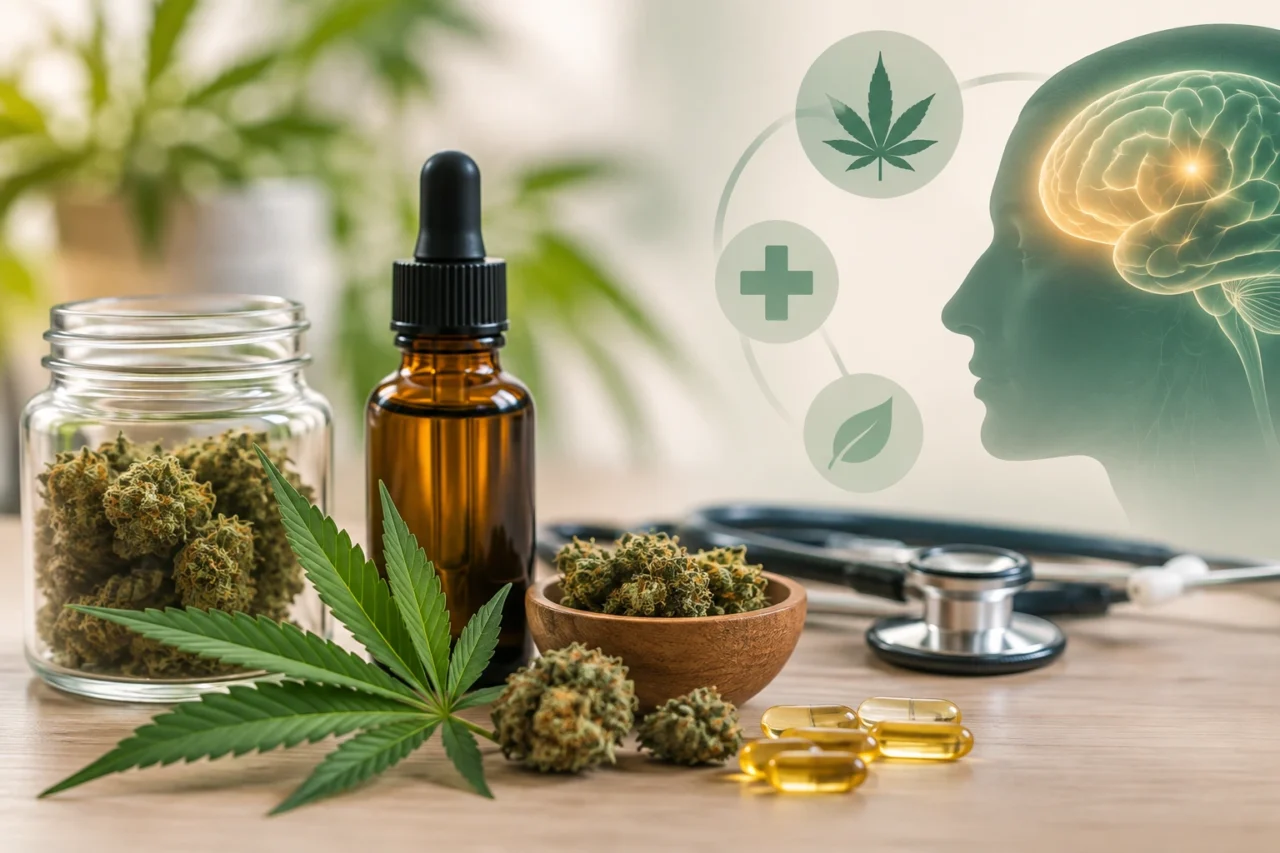
Quick Answer: Medical marijuana works mainly through compounds called cannabinoids, especially THC and CBD, which interact with the body’s endocannabinoid system. This system helps regulate functions such as pain, mood, appetite, memory, sleep, and movement. THC can affect the brain and produce a high, while CBD does not cause the typical THC high.
The effects depend on the cannabis product, its THC and CBD content, how it is taken, the amount used, and the person’s individual response. Research suggests cannabinoids may help with some symptoms and conditions, but the evidence is stronger for certain uses than others.
Medical marijuana, also called medical cannabis, is used in many parts of the United States to help manage certain symptoms and health conditions. But many people still have a basic question before considering it: how does medical marijuana work?
The answer is more complicated than simply saying that cannabis “treats” a medical condition.
Cannabis contains many chemical compounds. Two of the best-known are THC (tetrahydrocannabinol) and CBD (cannabidiol). These compounds can affect the body in different ways. THC is responsible for the intoxicating effects commonly associated with marijuana, while CBD does not produce the typical marijuana high.
Medical cannabis can also be taken in several forms, and the way it enters the body can change how quickly its effects begin and how long they last.
If you’re considering medical marijuana, understanding how it works, what it may help with, and its possible risks can help you have a more informed conversation with a healthcare professional.
Considering Medical Marijuana?
If you’re wondering whether medical marijuana may be right for you, a licensed medical professional can review your symptoms and medical history and help you understand your options.
How Does Medical Marijuana Work in the Body?
To understand how medical marijuana works, it helps to understand cannabinoids.
Cannabinoids are chemical compounds that interact with cannabinoid receptors and signaling pathways in the body. The body also produces its own cannabinoids, known as endocannabinoids.
Together, these systems are often called the endocannabinoid system.
The endocannabinoid system is involved in several body functions, including:
- Pain
- Appetite
- Memory
- Movement
- Mood
- Sleep
- Immune responses
Cannabis compounds can influence these systems in different ways. The result can vary significantly from one person to another.
This is one reason medical marijuana does not affect everyone in exactly the same way.
What Are THC and CBD?
THC and CBD are two of the most commonly discussed cannabinoids, but they are not the same.
THC
THC is the cannabinoid most closely associated with the marijuana “high.”
It can affect areas of the brain involved in memory, attention, coordination, judgment, and perception. These effects can also cause unwanted symptoms such as dizziness, confusion, anxiety, or slower reaction times.
Some medical cannabis products contain THC because its effects may be useful for certain symptoms. However, THC can also cause impairment.
CBD
CBD does not produce the typical intoxicating high associated with THC.
That does not mean CBD is completely free of effects or risks. The FDA notes that CBD can cause side effects and may interact with other medicines. The FDA has approved a purified CBD prescription medicine for certain seizure disorders, but most CBD products sold outside approved medicines have not gone through the same FDA approval process.
Does Medical Marijuana Actually Treat a Disease?
This is an important distinction.
Medical marijuana may be used to manage symptoms, but that does not automatically mean it cures the underlying disease.
For example, research has found evidence that certain cannabinoid medicines can help with chemotherapy-related nausea and vomiting. There is also evidence of modest benefits for some types of chronic pain and multiple sclerosis symptoms.
However, evidence is limited or uncertain for many other conditions.
That means patients should not assume that because medical marijuana is permitted for a condition in their state, strong scientific evidence proves that cannabis treats that condition.
State medical cannabis laws and medical research are not the same thing.
What Conditions Can Medical Marijuana Help With?
The answer depends on the specific cannabis product and the condition being treated.
Research has found potential benefits for some uses, including:
- Chemotherapy-related nausea and vomiting
- Certain types of chronic pain
- Some multiple sclerosis symptoms
- Appetite and weight loss associated with HIV/AIDS
- Certain rare seizure disorders when using an FDA-approved CBD medicine
However, the strength of evidence varies by condition.
Some conditions have received attention because patients report benefits, but there may not yet be enough high-quality research to know whether cannabis is consistently effective.
This is why a medical cannabis recommendation should not replace regular medical care.
How Does Medical Marijuana Work Differently Depending on How You Take It?
The method of use can make a major difference.
Medical cannabis may be available in forms such as:
- Inhaled cannabis
- Oils or tinctures
- Capsules
- Edibles
- Topical products
- Other formulations depending on local laws
Each method can have a different onset and duration.
1. Inhaled Cannabis
When cannabis is inhaled, its effects generally begin more quickly than with an edible.
However, smoking cannabis can expose the lungs to harmful substances. The CDC notes that smoked cannabis can damage lung tissue.
2. Edibles
Edibles are processed through the digestive system.
Their effects can take longer to appear. This delay can make it easier for someone to consume more than intended before the first effects are noticeable.
The CDC warns that edible cannabis can have delayed or unpredictable effects and can increase the risk of consuming too much.
3. Oils, Capsules, and Other Products
These products can also have different absorption rates and durations.
The exact effect depends on the formulation, cannabinoid content, individual metabolism, and other factors.
For this reason, patients should follow the product instructions and guidance from their healthcare professional instead of assuming that all cannabis products work the same way.
How Long Does Medical Marijuana Take to Work?
There is no single answer.
The timing depends on factors such as:
- How the cannabis is taken
- THC concentration
- Amount used
- Individual metabolism
- Previous cannabis experience
- How often someone uses cannabis
- Whether other substances are used at the same time
The CDC specifically notes that the way cannabis is taken, THC concentration, amount used, previous experience, biology, and other substances can all influence its effects.
This is especially important with edible products because delayed effects can lead someone to consume more before the first dose has fully taken effect.
What Does Medical Marijuana Feel Like?
The experience varies from person to person.
Someone using a THC-containing product may experience:
- Relaxation
- Euphoria
- Sleepiness
- Changes in how time or space feels
- Changes in sensory perception
- Increased appetite
- Dizziness
- Dry mouth
- Slower reactions
- Problems with memory or concentration
Some people may instead experience unpleasant effects, including anxiety, panic, confusion, or paranoia. Higher amounts of THC can increase the likelihood of stronger unwanted effects.
A person should not assume that because cannabis is being used for medical purposes, it cannot cause impairment.
What Factors Affect How Medical Marijuana Works?
Two people can use the same cannabis product and have different experiences.
Several factors can affect the response, including:
1. THC and CBD Content
Products with different cannabinoid concentrations can produce different effects.
2. Amount Used
A larger amount may produce stronger effects and may also increase unwanted side effects.
3. Previous Experience
Someone who has never used cannabis may respond differently from someone who has used it regularly.
4. Method of Use
Inhaled cannabis and edible products do not behave the same way in the body.
5. Individual Biology
Metabolism, genetics, age, and other individual factors can influence the experience.
6. Other Substances
Alcohol and some medications can interact with cannabis or increase impairment.
Can Medical Marijuana Make You High?
Yes, medical marijuana containing THC can make you high.
The fact that cannabis is being used for a medical purpose does not remove THC’s intoxicating effects.
THC is the main cannabinoid responsible for the marijuana high. Depending on the product and amount used, a person may experience changes in perception, coordination, memory, judgment, or reaction time.
CBD, on the other hand, does not produce the typical THC high. This distinction is particularly important for patients who want to avoid intoxication.
What Are the Side Effects of Medical Marijuana?
Medical marijuana can cause side effects, particularly when THC is involved.
Short-term effects can include:
- Dizziness
- Sleepiness
- Dry mouth
- Increased appetite
- Faster heart rate
- Confusion
- Poor coordination
- Memory problems
- Slower reaction time
- Anxiety or panic
- Changes in perception
Some people can experience more serious reactions, particularly after consuming too much THC. These can include severe confusion, hallucinations, paranoia, extreme anxiety, or severe vomiting.
The risk is not identical for every person.
Can You Drive After Using Medical Marijuana?
Using medical marijuana does not make it safe to drive while impaired.
Cannabis can affect reaction time, coordination, judgment, decision-making, and perception. Combining cannabis with alcohol can increase impairment further.
If you have used cannabis and feel impaired, do not drive.
It is also important not to assume that you are safe simply because you no longer feel strongly intoxicated. The effects on skills needed for driving can be difficult to judge accurately.
Can Medical Marijuana Interact With Other Medicines?
Yes.
Cannabis can interact with other drugs, and the risks depend on the specific medicines involved. The CDC recommends talking with a healthcare professional about medicines you are taking or considering before using cannabis.
This is especially important if you take several prescription medicines or medicines that already cause sleepiness or dizziness.
Do not stop a prescribed medicine simply because you plan to use medical cannabis. Ask your healthcare professional about possible interactions first.
Can You Use Medical Marijuana With Alcohol?
Combining cannabis and alcohol can increase impairment.
The CDC states that using alcohol and cannabis at the same time is likely to cause greater impairment than using either one alone.
For someone using medical cannabis for the first time, avoiding alcohol while learning how the treatment affects them can reduce the chance of unexpected impairment.
What Happens If You Take Too Much Medical Marijuana?
Taking too much cannabis can produce uncomfortable or sometimes dangerous effects.
Possible signs include:
- Extreme confusion
- Panic
- Severe anxiety
- Paranoia
- Very fast heart rate
- Hallucinations
- Severe nausea or vomiting
- Extreme sleepiness
Edibles deserve particular caution because their effects can take longer to appear.
If someone has severe symptoms, loses consciousness, has trouble breathing, experiences a medical emergency, or you are seriously concerned about their condition, seek emergency medical help.
In the United States, Poison Control can also be contacted at 1-800-222-1222 for suspected poisoning.
Is Medical Marijuana Safe for Everyone?
No.
Cannabis is not appropriate for everyone, and individual risks should be considered.
Extra caution may be needed for people who:
- Take multiple medications
- Have certain heart conditions
- Have a history of psychosis
- Are pregnant or breastfeeding
- Are older adults at increased risk of falls
- Have experienced problems with cannabis in the past
The FDA strongly advises against using cannabis, THC, or CBD during pregnancy and breastfeeding.
Anyone with a significant medical condition should discuss cannabis use with a qualified healthcare professional before starting treatment.
Is Medical Marijuana FDA Approved?
This is an area where terminology can become confusing.
The FDA has not approved the cannabis plant itself as a treatment for any disease or condition. However, the FDA has approved specific cannabis-derived or cannabis-related prescription medicines.
These include:
- Epidiolex, a purified CBD medicine
- Marinol and Syndros, which contain dronabinol
- Cesamet, which contains nabilone
These approved medicines have specific medical uses and are different from state-regulated medical marijuana products.
So, a state allowing medical marijuana does not mean that every cannabis product sold through that program has FDA approval.
Medical Marijuana vs. Prescription Cannabis Medicines
These terms are sometimes used as if they mean the same thing, but they do not.
State medical cannabis programs generally involve cannabis products regulated under state law.
FDA-approved cannabis-related medicines are prescription drugs that have gone through the FDA’s drug approval process for specific uses.
That difference matters because FDA-approved medicines have been evaluated for specific indications, quality, safety, and effectiveness.
Does Medical Marijuana Work for Everyone?
No.
Even when research shows a potential benefit, it does not mean every patient will experience the same result.
Cannabis research also varies greatly by condition and product.
For some uses, there is stronger evidence. For others, researchers still need better studies. NCCIH notes that evidence supports some cannabinoid uses, while research for many other conditions remains limited or uncertain.
That is why medical cannabis should be viewed as one possible treatment option rather than a guaranteed solution.
Why Is More Research Needed?
Cannabis research has increased, but important questions remain.
Researchers are still studying:
- Which cannabinoids work best for specific symptoms
- Which doses are most appropriate
- Long-term effects
- Differences between cannabis products
- Drug interactions
- Which patients are most likely to benefit
- Which patients may face higher risks
The NIH continues to support research into cannabis, cannabinoids, and the body’s endocannabinoid system.
This growing research may help healthcare professionals better understand where cannabis-based treatments fit into medical care.
How Can You Use Medical Marijuana More Safely?
If medical cannabis is legal and recommended for you, several basic safety steps can help:
- Follow the instructions provided by your healthcare professional.
- Know whether your product contains THC, CBD, or both.
- Avoid taking more than recommended.
- Be especially careful with products that have delayed effects.
- Avoid combining cannabis with alcohol unless your healthcare professional specifically advises otherwise.
- Tell your healthcare professional about all prescription and over-the-counter medicines you take.
- Do not drive or operate machinery while impaired.
- Keep cannabis products away from children and pets.
- Ask about unwanted effects instead of simply increasing or stopping treatment on your own.
The goal should be informed and supervised use, not simply finding the strongest product.
Frequently Asked Questions
1. How does medical marijuana work?
Medical marijuana works through cannabinoids that interact with signaling systems in the body, including the endocannabinoid system. THC and CBD can produce different effects, and the overall response depends on the product and the individual.
2. Does medical marijuana make you high?
It can. Medical marijuana containing THC can cause intoxication or a high. CBD does not produce the typical THC high.
3. What is the difference between THC and CBD?
THC is the cannabinoid primarily responsible for the intoxicating high. CBD does not cause the typical high, although it can still have effects and may interact with certain medicines.
4. How long does medical marijuana take to work?
It depends on the product and method of use. Inhaled cannabis generally acts more quickly than edible products, while edibles can have delayed effects. Individual factors also affect timing.
5. Can you drive after using medical marijuana?
You should not drive while impaired by cannabis. Cannabis can affect reaction time, coordination, judgment, and perception.
6. Can medical marijuana interact with prescription medicines?
Yes. Cannabis can interact with other medicines. Tell your healthcare professional about all medications and supplements you use before starting medical cannabis.
7. Can CBD make you high?
CBD does not produce the typical THC high. However, CBD is not completely without effects or risks, and some products may contain THC.
8. Is medical marijuana FDA approved?
The cannabis plant itself is not FDA-approved to treat any disease. The FDA has approved specific cannabis-derived and cannabis-related prescription medicines for particular medical uses.
9. Can medical marijuana cause side effects?
Yes. Possible effects include dizziness, sleepiness, dry mouth, changes in memory and coordination, increased heart rate, anxiety, and impaired reaction time.
10. Does medical marijuana work for every condition?
No. Research supports some medical uses more strongly than others, and evidence remains limited for many conditions.
Conclusion
Understanding how medical marijuana works starts with understanding cannabinoids such as THC and CBD. These compounds can interact with the body’s signaling systems and may affect pain, appetite, movement, mood, sleep, and other functions.
However, medical cannabis is not a one-size-fits-all treatment. Its effects depend on the cannabinoid content, amount, method of use, individual biology, other medications, and other factors.
THC can cause a high and impair important skills such as coordination, judgment, and reaction time. CBD does not produce the typical THC high, but it can still have side effects and interact with medicines.
If you’re considering medical marijuana, talk with a qualified healthcare professional about whether it is appropriate for your condition, what risks may apply to you, and how it fits with your current treatment.