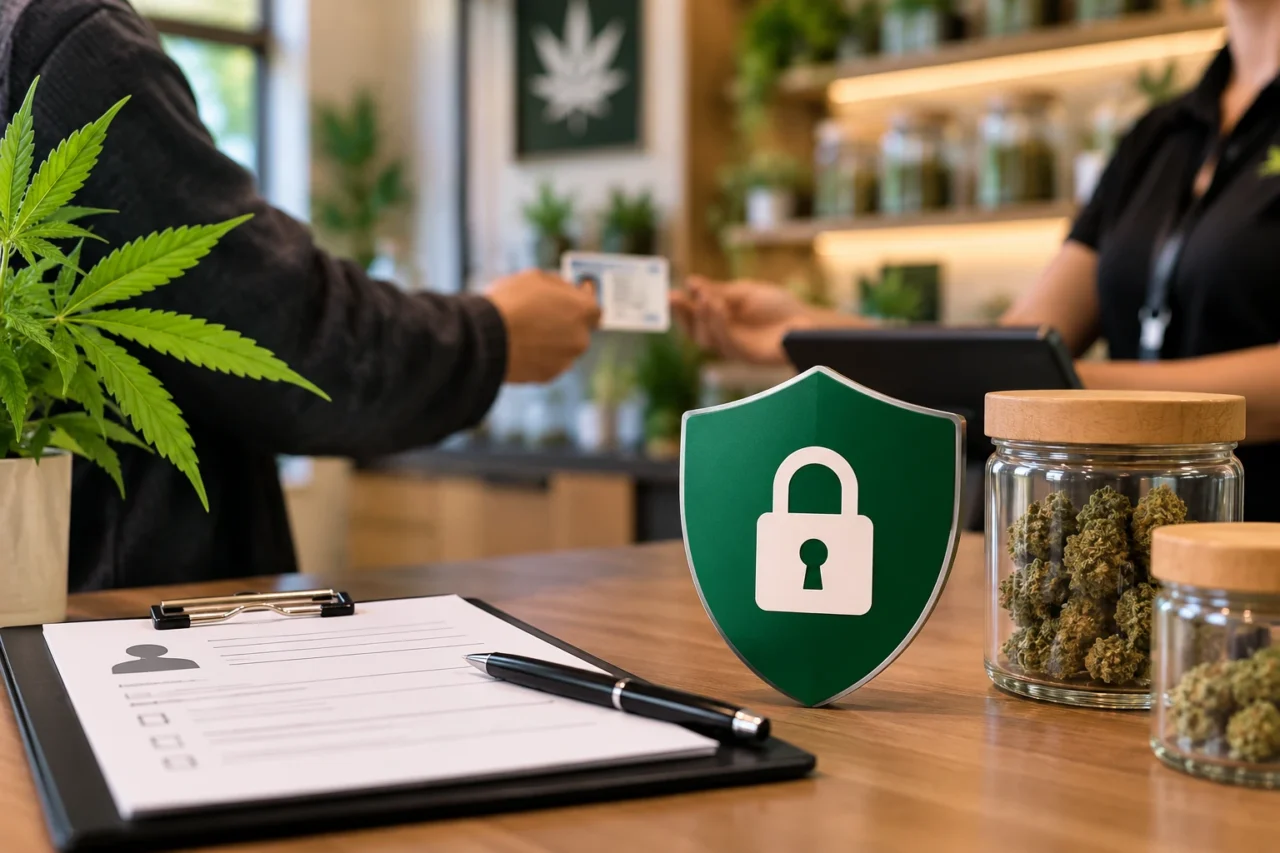
Quick Answer: What do dispensaries do with your information? Dispensaries may collect personal details such as your name, date of birth, identification information, contact details, purchase history, and payment-related information. They may use this information to verify your age, process purchases, follow state cannabis regulations, prevent fraud, manage customer accounts, and provide services.
Some dispensaries may also use customer information for loyalty programs, marketing, analytics, or other business purposes. Certain information may be shared with service providers or disclosed to regulators or law enforcement when legally required or permitted.
The exact rules depend on your state, whether you purchase medical or adult-use cannabis, the dispensary’s policies, and applicable privacy laws.
Buying cannabis at a licensed dispensary usually involves more than simply choosing a product and paying for it. You may need to show identification, provide contact information, create an online account, or join a rewards program.
That can raise an understandable question: What happens to all of that information after you leave the dispensary?
The answer is not the same everywhere. Cannabis businesses operate under state-specific regulations, while general consumer privacy laws can also affect how personal information is collected, used, stored, and shared. Medical cannabis customers may have additional privacy protections depending on the state and the type of business involved.
It is also important not to assume that HIPAA automatically protects everything you tell a dispensary. HIPAA applies to specific healthcare organizations and their business associates, not every company involved with medical cannabis.
Understanding these differences can help you make better decisions about what information you provide and which dispensaries you choose to use.
Protect Your Privacy When Using Medical Cannabis
Worried about keeping your cannabis info private? Before creating an account or joining a rewards program, review the dispensary’s privacy practices, what data they collect, why, who they share it with, and your options for marketing or data use.
What Do Dispensaries Do With Your Information?
Now let’s look more closely at what information dispensaries collect, why they may need it, who can potentially receive it, and what you can do to protect your privacy.
1. What Information Does a Dispensary Collect?
The information collected depends on the dispensary, state regulations, and whether you shop in person or online.
Common information can include:
- Full name
- Date of birth
- Government-issued ID information
- Phone number
- Email address
- Home or delivery address
- Purchase history
- Products purchased
- Transaction amounts
- Loyalty-program information
- Online account details
- Payment-related information
Medical cannabis patients may provide additional information connected with their status in a state medical cannabis program.
However, not every dispensary collects all of these details.
2. Do Dispensaries Keep a Copy of Your ID?
Not always.
A dispensary may simply inspect your driver’s license or other government-issued identification. Another business may use an electronic ID scanner or verification system.
Whether an image or copy of your ID is actually stored depends on the company’s technology, policies, and applicable regulations.
If you are concerned, ask:
“Do you store a copy of my ID, or do you only use it to verify my age?”
This gives you a clearer idea of what happens to your identification information.
Why Do Dispensaries Need Your Information?
1. Age and Identity Verification
One of the most obvious reasons is to verify that you are legally allowed to purchase cannabis.
Licensed cannabis retailers have to follow the rules of the jurisdiction where they operate. Checking identification can help them confirm a customer’s age and identity.
2. Regulatory Compliance
Cannabis businesses often have recordkeeping and reporting responsibilities.
Depending on the state, dispensaries may have to maintain information about transactions, inventory, purchases, patient limits, or other compliance requirements.
This means some information may be collected because the business is required to maintain it rather than because the company simply wants additional customer data.
3. Completing Online Orders
Online cannabis purchases can require more information than an in-store transaction.
For example, an online order may require your:
- Name
- Phone number
- Email address
- Delivery address
- Payment information
- Account credentials
The business may also rely on third-party software to process orders, payments, communications, or deliveries.
Do Dispensaries Track Your Purchases?
In many regulated cannabis markets, dispensaries must maintain transaction records.
The exact information recorded varies by state.
A record may include details such as the date of purchase, products purchased, quantities, and transaction amount. Medical cannabis systems may also connect purchases to a registered patient so that legal purchase limits can be monitored.
This does not mean that every cannabis purchase is automatically placed into one nationwide database.
Cannabis regulation is largely state-based, so the systems and requirements can differ significantly.
Can Dispensaries Use Your Information for Marketing?
They may, depending on their practices and applicable laws.
A dispensary may ask for your email address or phone number so it can send:
- Discounts
- Product announcements
- Store updates
- Loyalty rewards
- Promotional messages
- Special offers
Providing contact information for an order does not necessarily mean you want marketing messages.
Look for an unsubscribe option or marketing preference settings if you do not want promotional communications.
What About Dispensary Loyalty Programs?
Loyalty programs can be useful for discounts and rewards, but they can also connect your identity with your purchasing activity.
For example, if a rewards account is connected to your name and phone number, the business may be able to associate purchases with that customer profile.
Before signing up, consider:
- What information is required?
- Is purchase history connected to the account?
- How is the information used?
- Is information shared with vendors?
- Can you opt out later?
- Can you delete the account?
You do not have to assume that a loyalty program is unsafe. The important point is to understand what you are agreeing to.
Do Dispensaries Sell Your Information?
There is no universal answer for every dispensary.
Whether a business can sell or share personal information depends on applicable privacy laws, the type of information involved, and the company’s actual practices.
Some state privacy laws give consumers rights concerning the sale or sharing of personal information.
For example, the California Consumer Privacy Act provides eligible California consumers with several privacy rights, including rights related to accessing and deleting certain personal information and opting out of certain sales or sharing.
The best place to start is the dispensary’s privacy policy.
Look for sections explaining:
- Information collected
- How information is used
- Information shared with third parties
- Selling or sharing information
- Marketing
- Data retention
- Consumer privacy rights
Can Dispensaries Share Information With the Government?
In certain situations, yes.
Cannabis businesses may have to provide information to regulators as part of legal oversight. Law enforcement may also obtain information when authorized by applicable law.
This does not mean that every dispensary routinely sends every customer’s information to the government.
The circumstances depend on state regulations and the legal request involved. Medical cannabis programs may also have specific confidentiality requirements.
Can Police Get Dispensary Records?
Potentially, depending on the circumstances and applicable law.
A business may have to respond to a valid legal request, such as a subpoena, court order, warrant, or another legally authorized process.
Therefore, it is more accurate to say that dispensary information may have privacy protections but is not necessarily protected from every lawful government request.
Is Dispensary Information Protected by HIPAA?
This is one of the biggest misconceptions surrounding cannabis privacy.
HIPAA does not automatically apply to every dispensary.
The U.S. Department of Health and Human Services explains that HIPAA’s Privacy Rule applies to covered entities and their business associates in specific circumstances.
A licensed cannabis dispensary is not automatically a HIPAA-covered entity simply because it sells medical cannabis.
This distinction matters.
A healthcare provider that qualifies as a HIPAA-covered entity may have HIPAA obligations when handling protected health information. A cannabis retailer may operate under a different set of rules.
State privacy laws can provide additional protections.
Medical Cannabis Privacy vs. Adult-Use Cannabis Privacy
Medical and adult-use cannabis transactions are not necessarily treated the same way.
A medical cannabis program may involve:
- Patient registration
- Physician recommendations or certifications
- Qualifying conditions
- Patient identification
- Purchase limits
- State patient databases
Adult-use purchases generally do not require the same type of patient information.
As a result, the privacy considerations can be different.
If you use medical cannabis, check the specific privacy rules for your state’s medical cannabis program rather than relying on general information about recreational dispensaries.
What Happens to Information From Online Dispensary Orders?
Online purchases can involve several different companies.
For example, an online cannabis order might involve:
- The dispensary
- An ordering platform
- A payment processor
- A delivery provider
- An email or text provider
- Customer-support software
- Website analytics services
This does not mean that every company receives all of your information.
It does mean that you should look at the dispensary’s privacy policy to understand whether third-party vendors process customer data.
How Long Do Dispensaries Keep Your Information?
There is no single nationwide retention period for all dispensary information.
Different types of records can have different requirements.
Some transaction or compliance records may need to be retained because of state regulations. Other information may be stored according to the company’s internal retention policies or applicable privacy laws.
If you want to know how long a specific dispensary retains your information, check its privacy policy or contact the business directly.
Can You Ask a Dispensary to Delete Your Information?
Sometimes.
Your ability to request deletion depends on the privacy laws that apply to you, the business, and the type of information involved.
Some privacy laws provide consumers with deletion rights, but those rights often include exceptions.
For example, a business may be allowed or required to retain certain records to comply with legal or regulatory obligations.
Therefore, a deletion request may remove some information while other records must remain in the company’s systems.
How Can You Protect Your Cannabis Privacy?
You cannot always control what a dispensary is legally required to collect or retain, but you can take several practical steps.
1. Read the Privacy Policy
Before creating an online account, look for information about:
- Data collection
- Data use
- Third-party sharing
- Marketing
- Data retention
- Security
- Privacy rights
2. Avoid Unnecessary Information
If a business does not require certain information, consider whether you actually want to provide it.
This is especially relevant when signing up for optional rewards programs or promotional services.
3. Be Selective With Loyalty Programs
Ask yourself whether the discount or reward is worth creating a customer profile connected to your purchases.
4. Use Strong Passwords
If you have an online dispensary account, use a unique password.
If multi-factor authentication is available, consider enabling it.
5. Control Marketing Messages
If you do not want promotional emails or texts, use the available unsubscribe or opt-out controls.
6. Be Careful With Shared Devices
If other people can access your phone or computer, cannabis-related emails, order histories, notifications, and browser activity may be visible to them.
Privacy also involves protecting information on your own devices.
What Should You Look for in a Dispensary Privacy Policy?
A good privacy policy should help answer several basic questions.
1. What Information Is Collected?
Find out whether the business collects your name, ID information, contact information, purchase history, location information, or other data.
2. Why Is It Collected?
The policy should explain whether information is collected for transactions, legal compliance, marketing, analytics, customer service, or other purposes.
3. Who Receives It?
Look for information about third-party vendors, service providers, payment processors, advertising companies, or other recipients.
4. How Long Is It Stored?
Check whether the business provides information about data retention.
5. What Rights Do You Have?
Depending on your location, you may have rights to access, correct, delete, or restrict certain uses of your information.
What If a Dispensary Has a Data Breach?
A data breach can expose personal information stored by a dispensary or one of its service providers.
If you receive a breach notification, read it carefully to determine what information was involved.
Look for:
- The type of information affected
- When the incident happened
- When the company discovered it
- Whether your information was accessed
- What the company is doing about the incident
- What steps you should take
- Who you can contact for additional information
If the same password was used on other websites, change those passwords as well.
Can Employers Find Out That You Visit a Dispensary?
There is no general system that automatically tells every employer when an employee visits a dispensary.
However, employment situations can involve separate issues related to workplace drug testing, employer policies, state law, federal law, or particular occupations.
Medical cannabis protections also vary by jurisdiction.
If your concern involves employment, licensing, or a specific workplace policy, review the rules that apply to your particular situation.
Does a Dispensary Visit Appear on a Background Check?
A cannabis purchase is not automatically the same thing as a criminal record.
Typical background checks may focus on information such as criminal records, depending on the purpose of the screening and the information available to the screening provider.
However, different investigations can involve different sources of information.
Therefore, it is better not to assume that dispensary activity is always visible or always completely private.
How to Choose a Privacy-Conscious Dispensary
If privacy is important to you, ask a dispensary a few basic questions before creating an account.
You can ask:
- Do you store a copy of my ID?
- What information do you collect?
- Do you connect purchases to customer accounts?
- Do you sell or share personal information?
- Which third-party companies process customer data?
- How long do you keep customer records?
- Can I opt out of marketing?
- Can I request access or deletion?
- What happens if there is a data breach?
A clear answer can help you understand the business’s privacy practices before you provide additional information.
Final Thoughts
So, what do dispensaries do with your information? They may use personal information to verify your eligibility, process purchases, meet regulatory requirements, maintain records, prevent fraud, operate customer accounts, and communicate with customers.
Some dispensaries may also use information for loyalty programs, marketing, analytics, or other business purposes. Certain information can potentially be shared with third-party service providers or disclosed to government authorities when legally required or permitted.
Cannabis privacy is not governed by one nationwide rule. State cannabis regulations, consumer privacy laws, medical cannabis requirements, and the dispensary’s own policies can all affect how your information is handled.
If privacy matters to you, the most practical step is to read the dispensary’s privacy policy and ask questions about information collection, sharing, retention, and deletion before creating an account or providing optional information.
Sources
- U.S. Department of Health & Human Services — HIPAA Privacy Rule
- Federal Trade Commission — Health Privacy
- California Attorney General — California Consumer Privacy Act
- California Privacy Protection Agency — CCPA FAQs
- Ohio Administrative Code — Medical Cannabis Patient Confidentiality
- California Department of Cannabis Control — Cannabis Regulations